July 2, 2026

Amazon Prime Day 2026 data points to a new shopping signal: consumers arriving at Amazon directly from ChatGPT converted at 17% — the highest rate of any channel, ahead of Google, TikTok, Facebook, and YouTube. Spending is down overall and searches shifted toward everyday essentials, but the AI-assisted shopper is showing up with more intent.
2026 marks the 11th year of Prime Day. Starting in 2015 as a 24-hour event, it’s now a four-day summer super sale that consumers have come to expect. We used RealityMine® behavioral data from this year’s Prime Day (June 23–26) to see how online consumer shopping behavior is shifting. What did we find? Signals of a squeezed consumer who is spending less but comparing more, and increasingly (though still slowly) adopting AI within shopping journeys. Here’s what the data showed.
Prime Day generated an expected spike in traffic and engagement: daily reach (percentage of panel using the Amazon app or website) averaged 37%, up 5 percentage points from two weeks prior, and Amazon app users spent 21% more time on the app per day (average 12.4 vs 10.3 minutes) over the same period.
This spike was preceded by an ad push: Amazon ad impressions on YouTube tripled between June 2 and June 23 (the first day of Prime Day), with Prime-specific messaging ramping up the week before the event.
60% of Prime Day-themed ad impressions in that final week carried a single message – “Prime Day is June 23-26. Ask Alexa to find you early deals.” - indicating how Amazon is attempting to nudge consumers toward AI-assisted shopping (more about that in the next section).
Other retailers tried to piggyback on the success of Prime Day, with Walmart and Target running their own concurrent sales (Target Circle Deal Days and Walmart Deals sale). It's not clear the strategy paid off online, at least based on app and web reach (of course, these competing retailers both offer in-person shopping for shoppers with screen fatigue). Walmart and Target saw virtually no lift during the sale (each up just half a percentage point vs. Amazon’s 5pp).
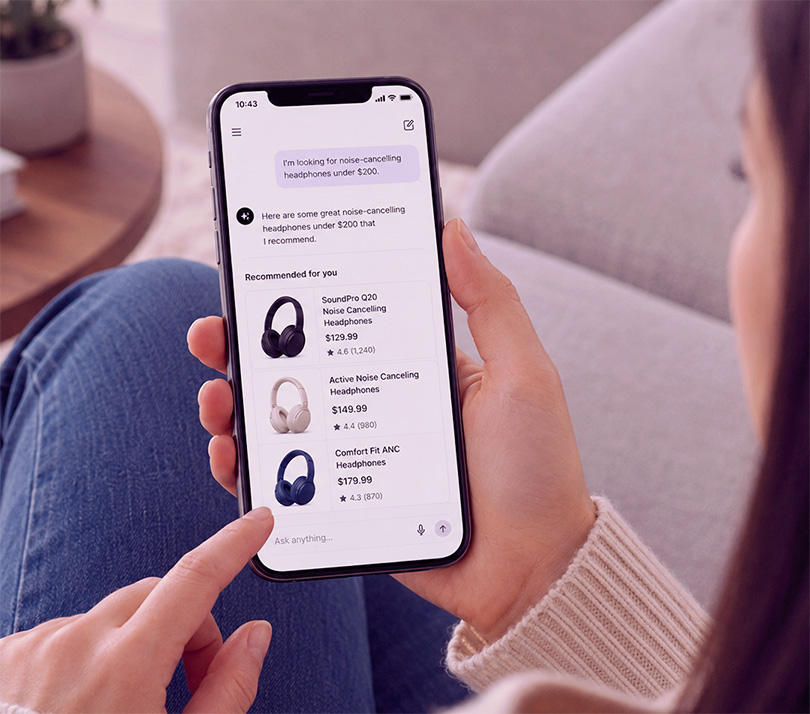
One of the biggest questions in commerce is how AI will affect buying habits in the years to come. Our Prime Day data offers one evidence point, suggesting chatbot use in the consumer shopping journey is (slowly) moving from early experimentation toward more consistent behavior. That said, “mainstream” is still too strong a word; the volume isn’t there yet. Here’s what we found:
Signs point to more consumers treating Prime Day as a time to replenish everyday essentials rather than splurge on big purchases. Average spend per buyer was down 12%, from $63 in 2025 to $56 in 2026. Over half of buyers on the panel (55%) spent $25 or under, up 6 percentage points from last year’s 49%, and just 12% spent over $100, down 2 percentage points from last year’s 14%.
62% bought just one item, an increase of 4 percentage points over last year’s 58%. At the same time, product page views increased - buyers viewed an average of 9 products per session in 2026, up from 7 in 2025. Perhaps this points to more considered comparison – looking for confidence before committing, even on smaller purchases.
What they’re buying seems to be shifting also: based on a sample of purchased products, compared to 2025, electronics and computers are down (13% of this year’s product mix vs. 17% of last year’s), while Health & Household, Pet Supplies, and Beauty/Personal Care are all up.
Search behavior adds another data point: Screens declined (“tablet” dropped from #6 to #38, “iPad” and “TV” fell out of the top 50 searches entirely) while some household essentials climbed: “toilet paper” was the second most common search (up from #24 last year) and laundry detergent was #11.
Taken together, this could point to an overwhelmed consumer simply hunting for deals on things they were already going to buy — or it could be a sign that Amazon's role in shoppers' minds is shifting, from a destination for big purchases to one for everyday staples.
Tentpole events like Prime Day generate a lot of analysis about overall spend and spikes. The brands with an edge are the ones who can see past the noise to what shoppers actually did.
Editor’s note: An earlier version of the scatter plot above calculated the x-axis using data from within Amazon shopping sessions only. It has been updated to use app transition data (e.g. direct transitions from ChatGPT app to Amazon app overall), which captures a broader population of Amazon users.
Your own data won't show you what's happening outside your ecosystem. Ours does.

Kate Jacobs
Insights Analyst
Kate Jacobs is an Insights Analyst at RealityMine®, where she works with the marketing and client-development teams to showcase the possibilities of RealityMine's data and support thought leadership. She also has a background in behavioral science and mixed-methodology research.
Featured