May 29, 2026
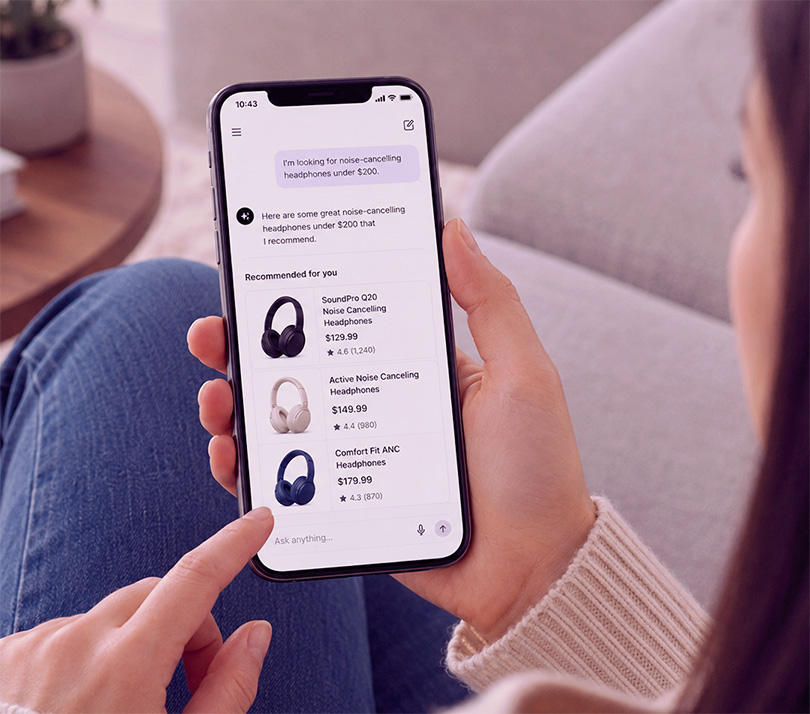
AI is becoming a primary surface for brand discovery — and it's creating a visibility challenge most organizations haven't fully mapped yet. Knowing what LLMs, agents and AI systems say about your brand is one part of it. Understanding what real consumers are actually doing on those platforms is the other. Most businesses currently have neither. The companies that get ahead of this will be the ones that treat both as a strategic priority now, not when the shift is already complete.
When mobile web arrived, a lot of companies found themselves scrambling. They'd built for desktop. Consumers moved to phones. Overnight, search traffic shifted, engagement moved, and businesses that hadn't seen it coming had to run hard to catch up.
I think AI is that moment again — times ten.
The speed is faster. The shift is more fundamental. And unlike mobile, where the device changed but the basic consumer behavior stayed broadly familiar, AI is changing how people discover, compare, and decide — the customer journey intelligence that has always mattered is now playing out on surfaces most organizations can’t see.
One thing I'd push back on in the way this conversation usually gets framed: AI doesn't affect every industry equally, and treating it as a monolithic threat or opportunity misses the point.
Take travel. If you're in that sector, the disruption is potentially existential. We're already — anecdotally, at least — starting to plan trips using LLMs. Asking for recommendations, putting itineraries together, comparing options. The next logical step is towards agents that knows your preferences, your loyalty programs, your budget, and books the whole thing for you. That's a radical redistribution of value across a whole industry value chain. Some players will benefit. Many won't.
Now think about something like consumer-packaged goods, where brand loyalty is deeply embedded and the purchase decision is often habitual rather than researched. The AI impact there could be far more limited. Nobody is switching from Coca-Cola to Pepsi because ChatGPT recommended it.
The honest question for any executive team isn't "how will AI affect us?" — it's "in our specific category, what might consumer behavior look like over the medium term, and will we still have a right to play?"
That's a harder question to sit with. But it's the right one.
My instinct — and I'll be honest that I can't prove this — is that many large brands will adapt to AI discovery faster than smaller ones, for the simple reason that they have the resources to invest early. As traditional SEO starts to matter less and visibility inside LLMs or through AI agents starts to matter more, the brands with scale have the opportunity to solve that problem first.
But disruption rarely plays out cleanly, and the same was true of the internet. Some categories saw their entire distribution model dismantled: travel agents on the high street, insurance brokers; they're largely gone. Other verticals barely changed at all. The companies that navigated the internet well weren't necessarily the biggest — they were the ones that understood, early, what was actually changing about their customers and industries and how to build a business model for the internet age.
While predicting the future is a fool’s errand, one rule that I think holds true is that in times of swirling change – which we are certainly in today - stay close to your customers. More than ever before. Get an accurate, ongoing read on how consumer behavior is changing as it relates to your category. And don’t necessarily assume that it’s still early days with consumer adoption of AI-powered products and services following a classic adoption lifecycle. Chat GPT reached 100 million users faster than almost any consumer product in history and this may prove true of agentic solutions to come across many consumer categories.
A lot of the AI brand visibility conversation is focused on LLM outputs — what does ChatGPT or Gemini say when someone asks about our category? Which brands get surfaced? What language does it use? For teams managing digital advertising intelligence, this feels like familiar territory: a new channel to monitor, a new algorithm to decode.
That's a reasonable place to start. But it's only part of the picture.
An equally interesting question is what real consumers are actually doing on these platforms. Are people in your category using LLMs to research purchases? If so, who are they — what are their demographics, their existing brand relationships, their broader digital behavior? How does that behavior connect to what happens downstream?
Scraping an LLM's response tells you what the model produces. Observed behavioral data tells you what real people do with it — and that's a very different signal.
Boards are right to ask about AI efficiency. Headcount assumptions, security risk, automation — these are legitimate governance questions, and most boards are raising them.
But the question I hear less often is the more important one: how is our customer changing, and does our business have the right to exist in the world they're moving into?
That's not an incremental question. It's not answered by reducing hiring by 20% or moving some workflows to AI. It requires urgent curiosity about what's shifting at the consumer level — before it shows up in your own metrics.
Does our business have the right to exist in the world they’re moving into?]
The companies that got mobile right didn't just build responsive mobile websites. They understood, earlier than their competitors, what their customers were actually doing. That understanding was the strategic advantage. Everything else followed from it.
AI is the same test. Brands that stay close to real consumer behavior — not modeled behavior, not what AI systems say consumers do, but what they actually do — will be better positioned to make those bigger calls. To know which parts of their business need to be reinvented and which will hold. To have a right to play in whatever comes next.

Chris Havemann
CEO
As Chief Executive Officer of RealityMine since 2018, Chris has overall responsibility for the performance and development of the business.Chris was previously co-founder and CEO of Research Now, the world’s leading online survey data collection business within the market research industry, which grew from a start-up to $240m revenue during his tenure. He has also served on the boards of HomeServe plc, Rated People Ltd and is a former governor of London Business School.Chris received his MBA with distinction from London Business School in 1999 and was awarded the AIM Entrepreneur of the Year award by the London Stock Exchange in 2009.
Featured