June 25, 2026
Chatbots are just one step in the journey. Consumers gather information, then act. RealityMine® tracked post-LLM app transitions across ChatGPT, Claude, and Gemini to see where users go next. Shopping and personal finance destinations are growing fast, while traditional search is losing post-LLM share. Here's what the data shows, and what it means for brands.
ChatGPT-to-Amazon sessions convert at roughly 11% — higher than any other traffic source RealityMine® measured, including search and social. Every brand with a digital presence is wrestling with the same underlying question: does LLM usage drive real-world commercial outcomes, and if so, how do you track it?
The answer matters for how brands think about content, attribution, and where in the purchase funnel LLMs sit. This kind of insight is exactly what app competitive intelligence can reveal.
We used RealityMine behavioral data to track where consumers go next after an LLM session – and how these destinations may be evolving.
We looked at next app visited after chatbot sessions across app and web — focusing on ChatGPT, Claude, and Google Gemini — and compared results for two time periods: summer 2025 vs. spring 2026 (referred to as “early” and “late” periods here).
At an overall level, the types of apps gaining traction as post-LLM destinations could be classed as action-oriented rather than passive scrolling sites: from the early to late periods, Shopping apps (e.g., Amazon, Walmart, Temu) rose from 15.7% to 17.2% of transitions, Personal Finance (e.g., Venmo, Capital One, TurboTax) from 13.1% to 16.7%, Food & Drink (e.g. DoorDash, Instacart) from 5.1% to 6.7%, and Education (e.g., ClassDojo, Duolingo, Coursera) from 3.6% to 6.5%.
A similar pattern shows up in food delivery. Someone might normally open a delivery app and scroll past a dozen restaurants before deciding. Ask an LLM "what should I order for a quick, healthy dinner nearby" instead, and that scroll never happens — the assistant is already filtered by cuisine, price, and dietary preference, leaving two or three options instead of twelve. By the time the delivery app opens, the consideration set has already collapsed. The app sees a fast, decisive order; it has no way of seeing the comparison that happened somewhere else first.
What does this signal suggest? More and more, people are leaving LLM sessions and taking action. Social Networking and Photography (e.g. Google Photos, Vimeo) categories – apps more associated with passive scrolling - remain among the most common post-LLM destinations, but their share is declining. Instead, post-LLM behaviour is becoming more diverse and increasingly action-oriented. Perhaps LLMs are evolving from tools for information gathering into tools that actively shape consumer intent and decision-making.
Amazon is the standout. Its share of post-LLM traffic grew roughly 33% across the period. This becomes more interesting when you investigate data from Amazon itself: Sessions that transition from ChatGPT directly to Amazon have the highest purchase rate of any traffic source we measured (around 11%), beating out both search and social.
These ChatGPT to Amazon sessions are also the longest, running about 50% longer than Google or Facebook-transitioned sessions, with more product page views and more searches per visit. What’s more – this is consistent across early and late time periods and is consistent with previous analysis we’ve run on special events such as Black Friday.
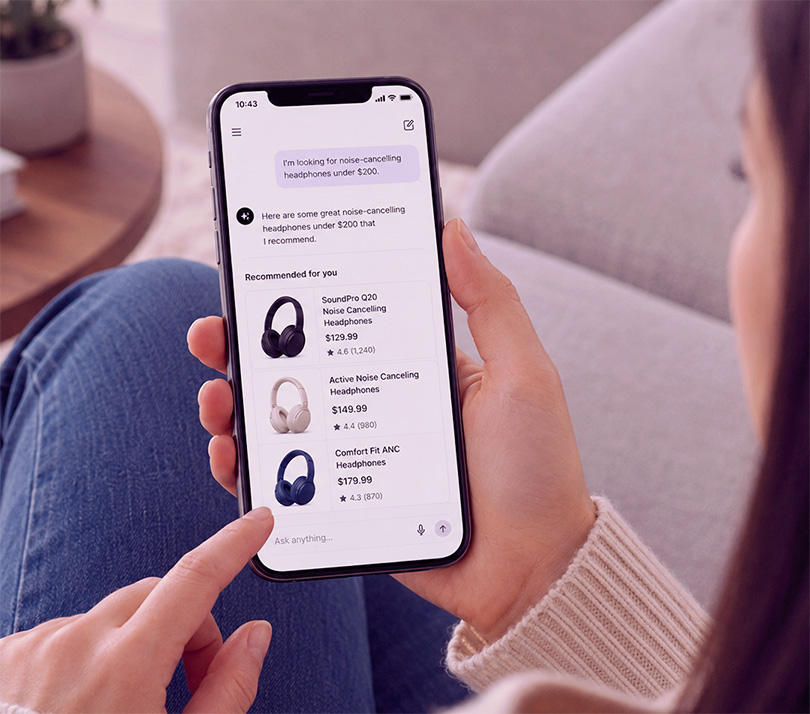
Picture a shopper who asks ChatGPT to compare wireless earbuds under $150. The conversation narrows a crowded category down to two or three real contenders — weighing battery life, fit, and noise cancellation in a way ten browser tabs rarely do cleanly. When that shopper then opens Amazon, they're not starting a search; they're closing one. They look up the exact models already discussed, compare final listings, and buy. Amazon's own data can't see the ChatGPT conversation that got them there — only a clean, fast, high-confidence session with no visible research trail.
While this doesn’t take into consideration what happens inside the LLM session, the behavior on Amazon afterwards looks different from other transition sources: more purposeful, more focused. This depth of engagement is consistent with stronger consumer intent — someone looking to complete a goal rather than explore and discover.
This pattern suggests the LLM session may be doing a specific kind of work: narrowing the consideration set before the shopper arrives at retail. They still browse on Amazon, but they're operating within a tighter frame. The result is more purposeful searching/comparing ultimately a higher likelihood of buying.
While purchase rate is consistently the highest of any source, average order value is more mixed. In the current analysis periods, ChatGPT-referred sessions have a lower AOV ($23) than Google ($27), Pinterest ($30) or Snapchat ($27). Previous analysis has found this varies. The picture developing is that LLM-influenced shoppers are more likely to buy, but not necessarily on higher-priced items
Zooming in on the Google eco-system, post-LLM traffic is a mixed picture. Gmail, Google Maps and Google Docs are up as next destinations; Search, Play Store, and Chrome are down. This tracks with our previous findings: the apps that involve completing a task or action are gaining share after chatbots, but traditional starting-point search-based apps are losing post-LLM momentum.
The upshot: Among people who use LLMs, search is less likely to be the next stop: the top-of-the-funnel function that search engines provide may already have happened inside the chatbot.
LLM usage is growing fast, but how best to determine its downstream effects on other platforms is still an unanswered question. Brands that win in this space will be the ones paying attention to the whole picture on online behavior and tracking subtle shifts over time. This means:
The brands best positioned to act on LLM-driven behavior change are the ones with the app competitive intelligence to see it in the first place.


Featured