

February 17, 2026
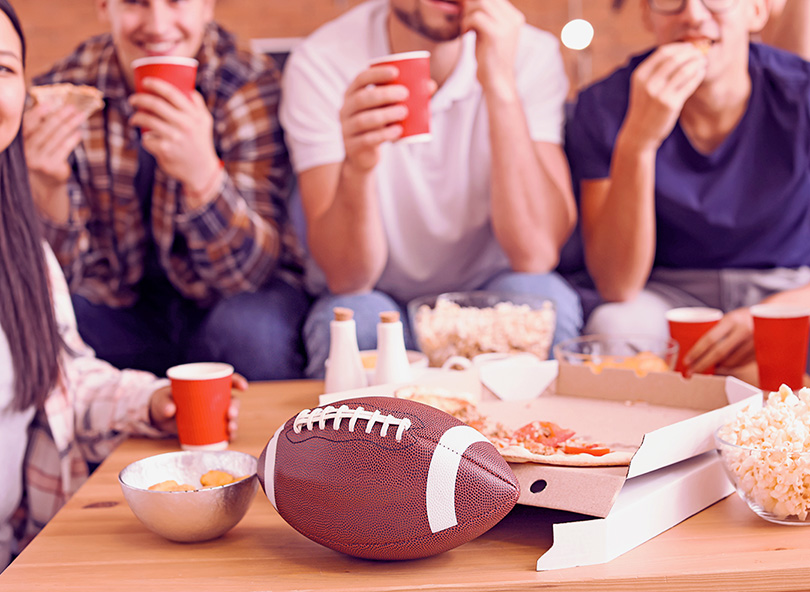
Food delivery brands spent big on Super Bowl LX. Uber Eats brought Matthew McConaughey and Bradley Cooper. Grubhub enlisted George Clooney. DoorDash went social-first with 50 Cent. But here's the question that matters most: did any of it actually move the needle on orders? Our behavioral for data from nearly 3,000 food delivery app users says the answer is surprising, and it has crucial implications for every brand investing in tentpole advertising events.
Super Bowl LX was a battlefield for food delivery platforms. With 30-second ad slots selling for $8 million on average and some premium spots exceeding $10 million, the stakes have never been higher. Factor in production budgets, celebrity talent, and supporting digital campaigns, and individual brands were likely investing $15 to $20 million or more on the day.
Each platform took a different strategic approach. Uber Eats doubled down on broadcast with its "Hungry for the Truth" campaign, letting viewers build their own version of the Super Bowl ad directly in the app. Grubhub made its Super Bowl debut with a Yorgos Lanthimos-directed spot promising to cover delivery fees on orders over $50. And DoorDash, which had advertised in four of the last five Super Bowls, skipped the in-game spot entirely in favor of a social-first campaign featuring 50 Cent and a roster of creators.
It was, by any measure, an enormous collective investment in reaching food delivery customers at one of America's biggest cultural moments. So what actually happened when we look at the data?
DoorDash's shift away from broadcast TV and toward social media was one of the most discussed moves of the advertising season. Our ad exposure data shows just how aggressively they leaned in to day-of-Super-Bowl ads, doubling its social media ad volume.
The other platforms took different approaches: Grubhub ads peaked on the Wednesday before the event, while Uber Eats went hard on the thematic content (43% of ads carried active Super Bowl messaging) even earlier, trailing off in the lead-up to the game.
But here's a data point that may give CMOs pause: Around half (52%) of food delivery app users on Super Bowl Sunday had seen a social media ad from a food delivery brand at some point during the prior week. More than a quarter (26%) were shown one on game day itself. Of those who saw an ad on Super Bowl Sunday, 13% went on to place an order — almost identical to the conversion rate for users who saw no food delivery ads at all. (Conversion figures were similar for those who saw an ad at any point during the previous week.)
Despite the heavy advertising blitz, Super Bowl Sunday may not be the food delivery bonanza the industry narrative suggests. Our behavioral data shows that user volume followed the usual weekly cadence for food delivery, with a spike on Saturday followed by a slight dropoff on Sunday.
10.1% of our US panel used one of the top three food delivery apps on Super Bowl Sunday. That's a 1.2 percentage-point lift compared to the average Sunday reach of 8.9%. For context, the Sunday before the Super Bowl hit 10.3% reach.
If the overall numbers feel underwhelming, the timing data is where things get interesting.
Nearly 7 in 10 orders (67%) were placed before kickoff, while just 1 in 4 happened during the game itself. Food delivery is a pregame ritual, not a halftime impulse.
The golden hour? Between 5 and 6pm EST, roughly an hour and a half before kickoff. This hour accounted for 12% of total orders and saw average order value spike to $39.44, a 28% premium over the day’s average. That's the signal of group ordering for watch parties.
On a typical Sunday, the ordering peak falls an hour later, between 6 and 7pm. The Super Bowl pulls that window forward, which has implications for promotional timing. If you're deploying targeted offers during the second quarter, you've already missed most of your audience.
When consumers did order, they were hunting for deals more aggressively than a year ago. One in five Super Bowl orders used a promotional offer this year, up from roughly 1 in 7 during Super Bowl 2025. This surge highlights broader consumer trends around price sensitivity and cost of living pressures.
The clear winner among promo types? Buy One Get One Free. BOGO offers accounted for 44% of all promotions used on Super Bowl Sunday, more than doubling their share from just 17% during last year's game. This makes sense: Behavioural science has demonstrated that consumers tend to overvalue things labelled as “free” – even if, say, direct comparison with a Percentage Off offer may warrant a better deal. (See our previous work on this topic here.)
Game day favorites performed exactly as you'd expect. Pizza's share of orders jumped 34% compared to a typical Sunday. Wings were up 35%. Wingstop and Pizza Hut showed the strongest individual gains.
And there's an emerging signal worth watching. Orders from restaurants specializing in healthier options (like salads, smoothies, poke bowls, and sushi) made up about 6% of Super Bowl orders, up from 4% during last year's game and 4.5% on a typical Sunday. That's still a small slice, but the direction is consistent with a broader wellness trend that showed up across Super Bowl advertising this year too, from Wegovy spots to campaigns promoting whole foods over processed alternatives. [LINK: https://www.adweek.com/brand-marketing/super-bowl-2026-health-conscious-wellness-bowl/]
But volume tells a different story than share growth. McDonald's captured 14% of all Super Bowl food delivery orders, a figure completely consistent with its average Sunday performance.
For brands where timing is essential to sales, different rules apply during special events like the Super Bowl. Behavioral data reveals those dynamics. Three takeaways for brands:
The brands making better decisions during tentpole events are the ones with data on what consumers actually did – not just what they were shown.


